Bareroot Plant Material
Dwarf Chinkapin Oak
Dwarf Chinkapin Oak
Couldn't load pickup availability
25 plants per unit
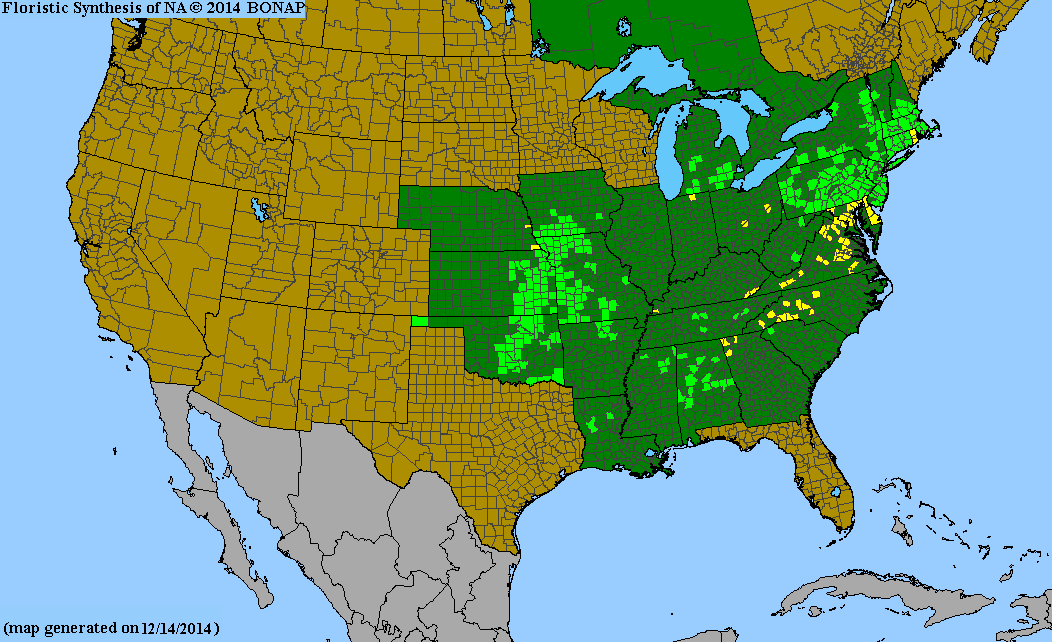
Quercus prinoides, or Dwarf chinkapin oak, is a small tree or shrub that is excellent for wildlife plantings. It is native to the eastern part of Kansas. It is also a good choice for situations when an oak species is desired but space is limited as it has a mature height of 12-15 feet and spread of 8-10 ft. This species is unique among the Oaks in that it can form thickets from lateral roots.
Leaves, Stems, and Fruit
The leaves are simple and alternately arranged on the twigs. They are 1.5-5" inches long and 0.75-2.5" inches wide with the broadest portion toward the outer end of the leaf. Usually, there are 5 to 9 shallow lobes along each leaf margin. The upper leaf surface is yellowish green and smooth while the lower surface is grayish white and pubescent. Male and female flowers are borne on the same tree, the latter of which gives rise to dark brown acorns that are 0.5 - 0.75" long. The trunk is short and up to 5" across with gray, scaly bark.
Use
Windbreaks - Due to it's dense and solid shrubby form, Dwarf chinkapin oak makes a decent candidate for lower level windbreaks on appropriate sites.
Wildlife - Acorns constitute a good staple food for a variety of bird and mammal species. Dwarf chinkapin oak is an excellent choice as a wildlife plant due to the production of high quality mast which is produced at a relatively early age (3-4 years old).
Adaptability and Soils
Dwarf chinkapin oak is adapted to the Eastern half of the state and grows best on dry, sandy knolls and ridges with rocky, well drained, slightly acidic soils. It is very hardy and drought tolerant. It should be planted in full sun.
Culture
One to two-year-old bareroot seedlings, 12 to 18 inches tall can be used in plantings. Initial growth is centered around root development. Dwarf chinkapin oak grows relatively slowly and should be protected from browsing animals until it is well established.
Pests
Dwarf chinkapin oak is very hardy and disease resistant. Few known major insect or disease problems exist.