Bareroot Plant Material
Eastern Red Cedar
Eastern Red Cedar
25 plants per unit
Juniperus virginiana, or Eastern redcedar, is a juniper rather than a true cedar. As Kansas' only native evergreen tree, it grows throughout the state. Natural stands are often indicative of shallow, poor soils. It tends to spread to uncultivated areas, or lands which are mismanaged for healthy grassland ecosystems. Its long life and dense, pyramidal form with persistent foliage makes it a desirable conservation plant. Eastern redcedar grows to a height of about 30 to 35 feet and the branches may spread 12 to 15 feet. A moderate rate of growth 1 to 1½ feet per year is typical.
Leaves, Stems and Fruit
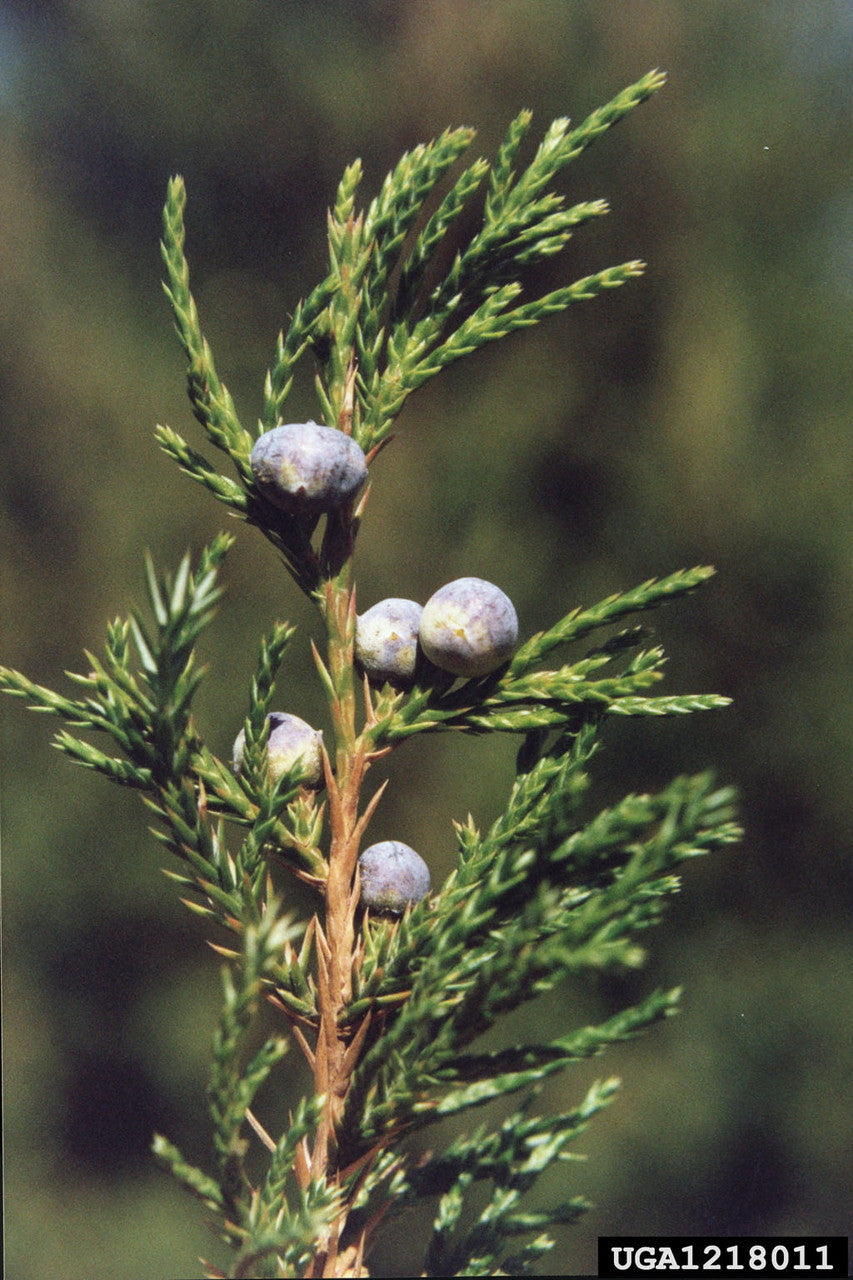
Eastern redcedar's leaves are small and scale-like, dark green in summer changing to reddish-brown in fall. Male and female flowers are inconspicuous and develop on separate trees in April. Blue, berry-like fruit ripens in September. The one-quarter inch fruit is borne, only on female plants and persists through the winter. The fruit is a favorite of numerous birds and other animals which accounts for its spread to areas where it is not wanted.
Use
Windbreaks - Because of the dense, compact, long-lived foliage and low branches, Eastern redcedar makes excellent windbreaks and living snow fences. It serves well as the evergreen component of a multiple row windbreak and, because of its density, is effective as a single row windbreak.
Products - Because of the durability of the heartwood, Eastern redcedar makes excellent posts. The dark red heartwood and white sapwood is very desirable for novelty items and chests.
Adaptation and Soil
Eastern redcedar is recommended for planting throughout the state and grows best in well-drained soils that are at least 24 inches deep. It may survive in very shallow, tight dry soils, but growth is slow. It is moderately tolerant of alkaline soils.
Spacing
Redcedars are spaced 6 to 10 feet apart.
Culture
Two-year-old, bareroot and container grown seedlings are generally used in plantings. Both bareroot and container grown seedlings are 8 to 12 inches tall. Unlike the pines, Eastern redcedar will grow 12 to 18 inches the first year with adequate water and freedom of competing vegetation. They will tolerate droughty and weedy conditions better than pines.
Pests
Eastern redcedar is an alternate host for cedar-apple rust, a serious disease of apples, but does little damage to the tree. Other common diseases include Kabatina and Cercospera blight. Bagworms, borers and spider mites are common pests.
Managing Eastern Redcedar
Eastern redcedar is the most durable and effective species for windbreaks in Kansas. Proper planning and management of a windbreak planting are necessary to both ensure successful establishment of the windbreak and to reduce the spread of ERC seedlings beyond the desired planting space.
Tips for success include:
Avoid over watering; identify your soil type and water accordingly. Clay soils will dry down much more slowly than sandy soils and need much less irrigation as a result.
Inspect seedlings on a regular basis for disease and pests.
After 5 years of growth, begin to survey and remove ERC seedlings from undesired areas on your property if they arise. Most volunteer seedlings will be located within a short distance of the windbreak (if female trees are present) and should be monitored annually for the presence of volunteer seedlings.
Remember volunteer ERC seedlings are best controlled when seedlings are under two feet tall as they can be easily removed from the ground mechanically. Cutting seedlings below the lowest green leaf will kill ERC seedlings; they do not resprout.